468x60 ads


ANDREW CHRISTIAN JOSEPH

SHAPE AND PART OF BODY

0 komentar


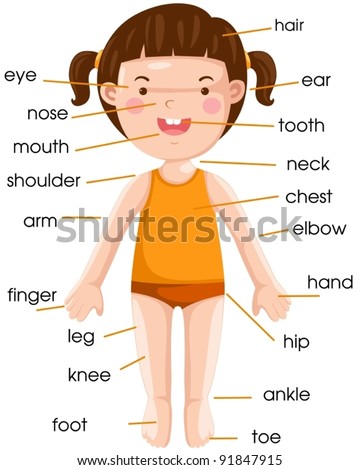
Vocabs (Shapes, Part of body)


Vocab is a collection of words alphabetized; a dictionary or the collection of words one knows and uses.
 This is the SHAPES :


Part Of Body :


PRESENT PERFECT TENSE

0 komentar


The present perfect tense
It is used to refer to :
·         An action or situation which began in the past and is still current
·         An action or event whichtook place in the past, where the exact time of the event is not specified or not clear
·         An action or event which has just happened
1.verbal  statement
(+) s+have/has +v3+o/c
I have taught english here for ten years
 (-)s+have/has +not/v3+o/c
i have not taught english here for ten years
(?)have/has +s+v3+o/c?
Have you taught english here for ten years?
 2.Nominal statement
(+) s +have/has +been+c
She has been in bali since 2009
(-) s+have/has +not+been+c
She has not been in bali since 2009
(?)have/has+ s+been+c?
Has she been in bali since 2009
We use the present perfect tense
1.          To talk about life experiences
Examples:
John has traveled all over the world
I’ve never stayed overnight in a hospital
2.   To talk about change over a period of time,contrasting the past with the present
Examples:
They have made the exams more difficult
The climate has got warmer
3.    To talk about achievements
Examples:
Man has walked on the moon
Scientists have identified all the genes in human DNA
4.   To talk about mulitiple actions repeated at different times.
Examples:
 we’ve won six matches this season
 I’ve seen this fillm three times

SIMPLE PAST TENSE AND PAST CONTINOUS TENSE

0 komentar


The simple past tense
1.(+) affirmative sentences : S+ V PAST+(O)
Examples:  Lina studied english an hour ago
                  May parents lived here in the 1990s
2.(-) Negative sentences : S+Did not +V base+ (O)
Examples : Lina Did not study English an hour ago
           May parents did not live here in the 1990s
3.(?) Interrogative sentences : Did + S+V BASE+(O)+?
Examples: Did Lina study english an hour ago?
           Did your pareents live here in the 1990s?
Sometimes a sentences doesn’t have a verb,It has a noun ,an adjective or an adjective or an adverb.
For this sentences ,use to be : was/were
1.(+ ) affirmative sentences : S+was/were+N/Adj/adv.+ (adv. Of time)
Examples: Andri was here some hours ago
                 Mr.tony was a teacher when he was young
          The children were students of this school
2.(-) Negative sentences : S+was/were+Not+N/Adj/adv.+ (adv. Of time)
 Examples: Andri was not here some hours ago
                  Mr.tony was not a teacher when he was young
            The children were not  students of this school
3.(?) Interrogative sentences : Was/were+ S+ +N/Adj/adv.+ (adv. Of time)
Examples: Was  andri here some hours ago?
                 Was Mr.tony a teacher when he was young?
            Were The children students of this school ?
Regular verbs
In regular verbs, the verbs end in-ed. Pay attention to the following rules.
1.verbs end in.. -e (add-d) >>
Ex: smile -> smiled
                Locate->located
2.consonant +-y (change –y to-i,then add-ed>> deny->denied
                                         Study->studied
3. vowel+ consonant (not –w otr y) double the consonant ,then add-ed
rob->robbed
beg->begged
4. anything including –w (add-ed ) >> knock -> knocked
                                    Borrow->borrowed
Irregular verbs
The verbs usually do not end in –ed
Ex: build->built
       Fly->flew
Meanwhile there some verbs past which are similar to their verbs base.
Ex:broadcast-> broadcast
      Hit->hit
       

The past continous tense
 
The sentences uses the past continius tense. It is used:
1.To talk about an action which was in progress at a ceratain time in the past
S+ (was/were+V-Ing+....) adv of time
Examples : mirna was writing a novel at about 7 p.m last night
           The students were having a geograpy class 11 a.m yesterday
2.To talk aboyt two actionsa that occurred at the same time.One action began earlier and was in progrss when the other action occurred
Example: the children were having lunch when their mother came home
Meaning :the children Had lunch when their mother came home ,
Meaning : The children had lunch,then their mother came home. A fter that,the children probabbly still had lunch.
While/when +S1 pat continius tense + S2+Simple past
Examples :
While I was sleepping the phone rang
When mr.jono was having a meeting a blast aound was heard
S1+Past continus +when _S2+Simplepast
We was listening to the CD when someone knocked on the door
The teacher was explaining the lesson when the blackout happend
We can use when/while with the past continius tense,ut we can only use when before the simple past tense
3.To talk about two long actions that were in the progress simultaneously
Example: I was studying, y mother was cooking
Meaning :studying needs much time,cooking also needs much time. They are considered as inthe same lenghth of time
While/when +S1 pat continius tense + S2+paast continus tense
While mrs. Joe was cleaning the garden Mr.joe was plowing his field.
While the children were practicing singing the teenagers were preparing for a drama

SIMPLE PRESENT TENSE

0 komentar


Is used to indicate situation that exists right now it is used for general  statement of fact and used for habitual or everyday activity


Habitual action

-Doni usually eats fried rice for breakfast

General truth

-A year has twelve months


Simple present pattern :


1. nominal (kalimatdengan predikat bukan kata kerja, kata kerjanya berupa To Be: I, Am, Are).

Ex.   (+)Heis a lawyer(S+to be+ C)

      (-)He is not a lawyer (S +To be+not+C)

      (?)Is he a lawyer (to be + S+ c)


When using word questions(W/H QUESTIONS SUCH,What,who,when,why,where,which,how),we simply put the question word in the beginning of the sentence and followed by the form of questionpattern above.

Ex:  Why is he she angry?

(W/H question +tobe+S+C)


2.Verbal (kalimat dengan predikat berupa kata kerja )

(+) S +verb1-s?es +O/C/Adv

    I study english eveyday

    He plays basketball evey Tuesday

(-)s+do/does+not +verb1+O/c/adv

   They do not eat meat

   She does not borrow comics eveyday

(?)Do/does+s+v1+o/c/adv

   Do you drink beer?

   Does she understand the lesson?


Spelling of third person singular forms

a.Most verbs :

add-s to infinitive

ex: work – works

 drink-drinks

 meet-meets


b.verb ending in consonants+y

ex: fly-flies

    cry-cries

    rely-relies


c. verds ending in –s,-z,-ch, or –x

Add –es to infinitive

Ex: miss-misses

      Buzz-buzzes

      Watch-watches

     Push-pushes

     Fix-fixes

d. verbs ending in vocals –o :

 Add –es toinfinitive

Ex : go-goes

       Do-does


Additional  : have-has

Do=i,you,we,they

Does=he, she, it, Mr. Bayu, Miss Kartini


Adverd of time (keterangan waktu)

-everyday

-every week

-in the morning

-every / each

-every month

-every year

-at seven

-once / twice a day


Adverb of frequency  ( keterangan pengulangan )

-always      

-never

-sometimes

-ever

-seldom

-often

-usually

GREETINGS

0 komentar


When you say ‘hello’ in a conversation, it means you have said a kinds a greeting. Close friends often hug when they greet each other , especially after a long time without seeing one other,Men sometimes give each other a hand shake or a high – five(touch palms above the head).
Tips: Stand near a person and say hello
          Express happiness to see person
          Ask a question or begin a conversation
              
Note: do not use “good day”,except in Australia.
·  General greetings (Formal)
  1. Hello!
  2. How are you?
  3. How are you doing?
  4. How is everything?
  5. How’s everything going?
  6. How have you been keeping?
  7. I trust that everything is well.
General greetings (Informal)
  1. Hi.
  2. What’s up?
  3. Good to see you.
  4. How are things (with you)?
  5. How’s it going?
  6. How’s life been treating you?
Greeting a person you haven’t seen for a long time (Formal)
  1. It has been a long time.
  2. It’s been too long.
  3. What have you been up to all these years?
  4. It’s always a pleasure to see you.
  5. How long has it been?
  6. I’m so happy to see you again.
Greeting a person you haven’t seen for a long time (Informal)
  • How come I never see you?
  • It’s been such a long time.
  • Long time no see.
  • Where have you been hiding?
  • It’s been ages since we last met.

EXPRESSING SYMPATHY

0 komentar


We should show our sympathy when our family,friends and colleagues experience something bad or go through a terrible situation.
 
Showing shympathy
·         i’m sorry to hear that
·         oh dear. I know how it feels
·         what a terrible situation for you!
·         Poor you.
·         What a shame !
·         You must be upset
·         Please accept my condolences!
·         You have my deepest sympathy
·         What a terrible situation!
·         That is a pity/shame!
·         Oh,that’s awful.
     
Coversation Expressing sympathy

Andrew : Hi, Doni. What's up? You look so sad.

Doni : Yea, my grandpa died last night. 

Andrew : Really? I'm sorry to hear that. 

Doni : Thanks. 

Andrew : If I'm not mistaken, he is in Bandung, right? 

Doni : Yes. We haven't visited him yet. 

Andrew : Does your family plan to go to Bandung? 

Doni : Yes. Tonight. We are going to leave for Bandung. 

Andrew : Oh, I hope your family will be fine.